What is a Facelift?
A facelift, also known as a rhytidectomy, in Boston and Worcester, Massachusetts, is a procedure aimed to improve various signs of aging, which result from many factors such as stress, gravity, and hereditary aspects. A facelift corrects sagging or loose skin in the lower half of the face, deep creases along the corners of the mouth and lower eyelids, and loose skin or fatty areas under the chin and jaw.
Am I a good candidate for facelift surgery?
Generally, good candidates for a facelift are those who suffer from excess skin or sagging on the lower face and neck, possess quality skin elasticity, and have strong bone structure. Healthy men and women who are non-smokers and have realistic expectations for the outcome of their surgery can expect to see optimal results.
Facelift – Patient 131
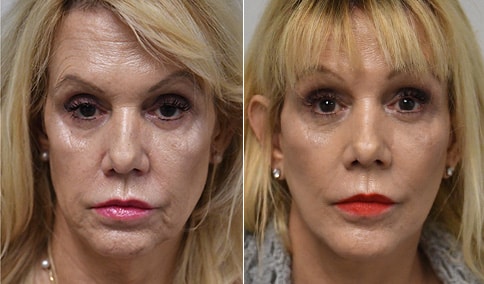
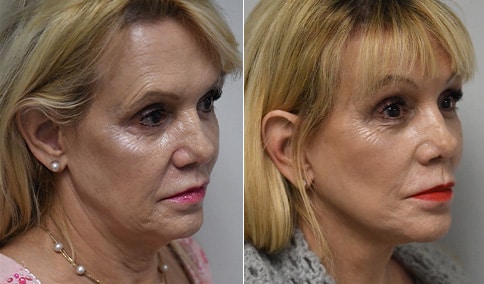
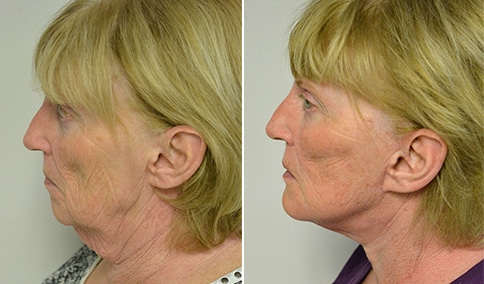
A delightful woman in her mid 70’s who is bothered by facial aging. She would like to look more youthful but still have a natural appearance. As we age, we lose volume in our face and the brows come down and we lose our neckline. She is shown before and again, 6 weeks after a brow-lift, upper and lower eyelid blepharoplasty and a facelift. She is thrilled with her more rested but still natural appearance.
Facelift – Patient 130
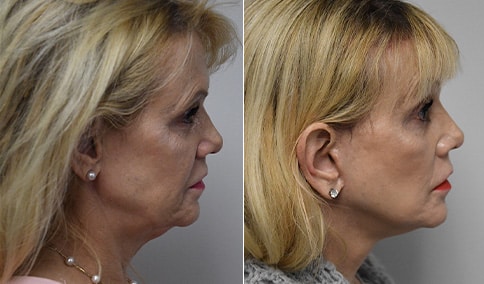
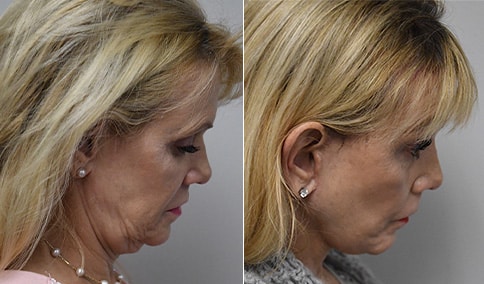
A woman in her later 60’s who is bothered by an aged appearance around her eyes and her neck. She is shown before and again, 4 months after bilateral upper eyelid blepharoplasty and Facelift .She is pleased by her improved but still natural appearance
Facelift – Patient 129
A woman in her later 40’s who is bothered by laxity of her neck. She is shown before and again, 6 months after a facelift. She has also had Botox to the forehead
Facelift – Patient 128
A woman in her early to mid 60’s shown before and again, 6 weeks after a brow lift and facelift.
Facelift – Patient 127
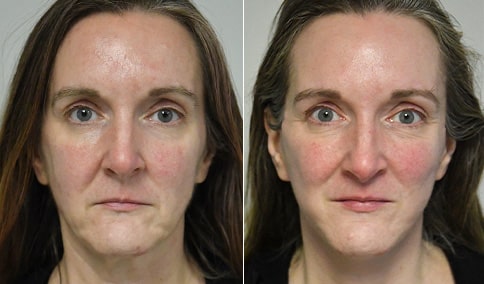
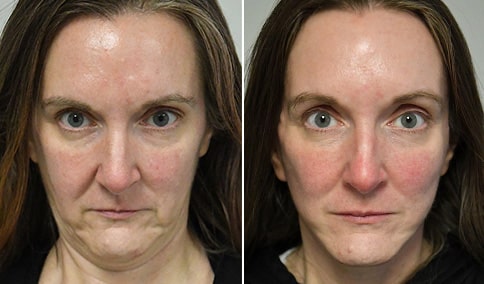
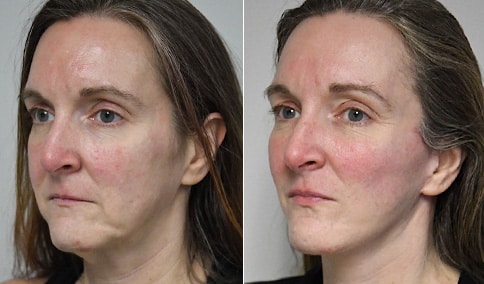
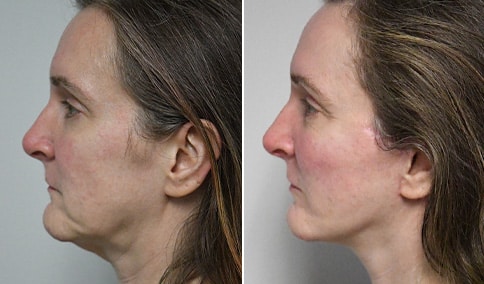
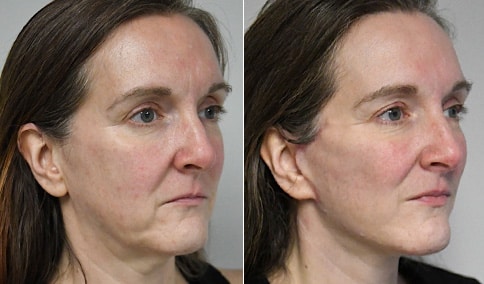
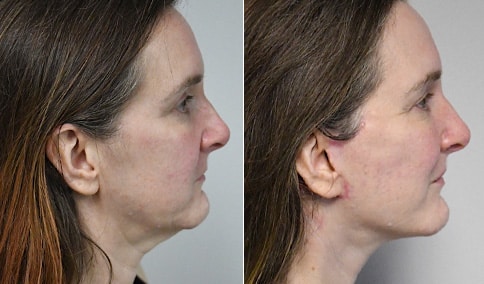
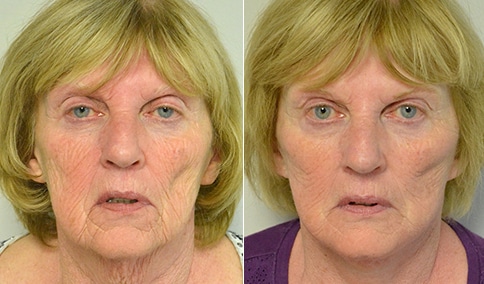
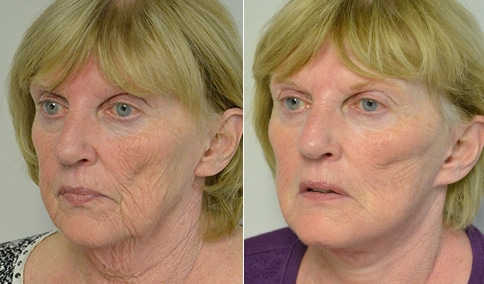
A woman in her early 70’s who is bothered by an aged appearance and laxity of her neck skin. She has significant sun damage and was a smoker in the past, but has not smoked for more than 6 years. Examination shows significant volume loss around the eyes and cheeks from the aging process, and her left cheek is much deeper than her right. She also has a weak chin.
She is shown before and again, 6 months after a facelift, including a chin implant and fat grafing to her midface and upper eyelid sulcus to treat the aging related hollowing of her eyes. She also has had some Restylane Lyft to her cheeks after surgery.
Discussion: The poor quality of her skin from years of smoking and the sun damage will limit the result that we can obtain from a facelift. Her skin elasticity is quite poor. It is not just the tailor but also the fabric that we are working with that influences the result. But the fat grafting can improve the volume loss and may bring in stem cells that improve the quality of the skin. When a chin is weak, a chin implant can also dramatically improve the results. Fat grafting is unpredictable- even though significantly more fat was placed to her hollower left cheek at the time of surgery, it still remains hollower. It is common to “build the foundation” with the fat grafting and then return at 6-12 months and add a some of the non animal stabilized hyaluronic acid (NASHA) fillers such as those in the Restylane/Juvederm families to further improve the results. A patient with prominent creases of the skin from poor elasticity is prone to “jokers lines”-and upward sweep of the skin lines at the corners of the mouth. This has been limited in her case by the fat grafting at the time of her surgery to replace volume loss in these areas.
What are my options for a facelift?
There are multiple methods to a facelift, including the traditional facelift, the limited incision facelift, and a neck lift. A traditional facelift involves an incision from the hairline at the temples to the lower scalp. An additional incision under the chin may be required to tighten loose skin on the neck. A limited incision facelift calls for shorter incisions at the temples, which may extend under the lower eyelids or upper lip. Lastly, a neck lift involves incisions starting in front of the earlobe and extending behind the ear to the lower scalp. Dr. Hall will advise you in which type of facelift is right for you, based on the degree of change you would like to see.
Facelift surgery can be performed under a local anesthetic or general anesthesia. When local anesthetic is used, the patient is awake but does not feel any pain, while general anesthesia causes the patient to “sleep” during the surgical procedure. The outcome of facelift surgery is the same, despite which option patients choose.
What should I expect during recovery?
Downtime associated with a facelift varies on the type of facelift performed, though most patients take two weeks to heal. Patients will experience bruising and swelling around the ears, and bandages are wrapped around the incision sites to minimize swelling. Most patients feel minimal discomfort during recovery, though a dull ache behind the ears may occur. Medication is provided for a comfortable recovery.
It is advised that patients refrain from strenuous activities for a minimum of three weeks after surgery, and athletic activities for six weeks. While recovering, it is important to keep the head elevated while sleeping to ensure desired results.

“Dr. Hall and all of his staff are very welcoming and supportive. In addition, I am extremely pleased with the results of my procedure. I have already referred a friend to Dr. Hall!”
Real Patient Ratings™ Review





Cosmetic & Plastic Surgery Specialist
"I treat my patients like I would treat
- Jonathan D. Hall, MD, FACSmembers of my own family."
Schedule Consultation