What is Botox®?
Botox® has become the most popular and fastest growing non-surgical procedure in the nation. Botox® is the brand name of a purified formulation of botulinum toxin type A, just one of seven different types of toxins derived from the bacterium Clostridum botulinum. This formulation blocks the release of acetylcholine and relaxes muscles, which successfully treats conditions caused by overactive muscles for more than ten years. More recently, Botox® has been used to treat facial wrinkles due to overactive muscles in Boston and Worcester, Massachusetts.
Am I a good candidate for Botox®?
Almost everyone with “dynamic rhytids”, or facial lines due to overworked muscles is considered a good candidate. Botox® works especially well with “frown lines”, forehead lines, and “crow’s feet.” Although there is no evidence that clinical doses of botulinum toxin type A have any effect on the unborn baby, BOTOX® should be avoided if you are pregnant. It should also be avoided in patients with neuromuscular disorders.
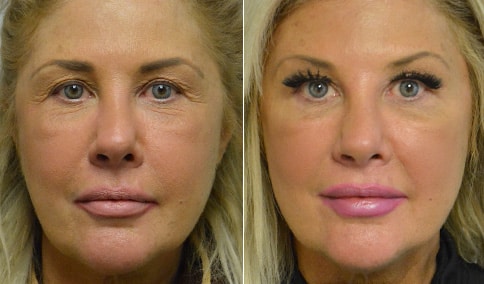
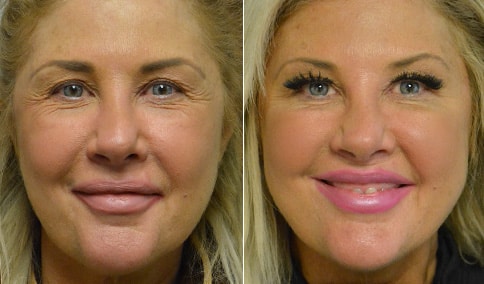
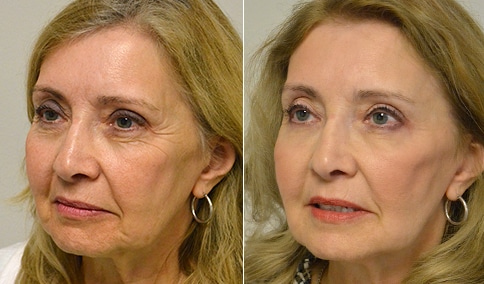
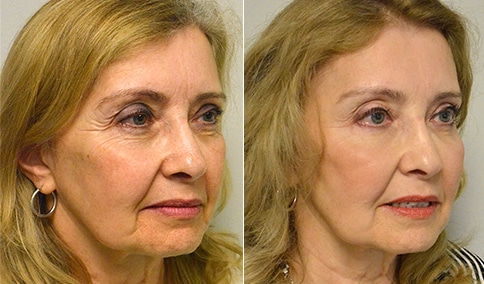
Redensity and Filler Patient #46
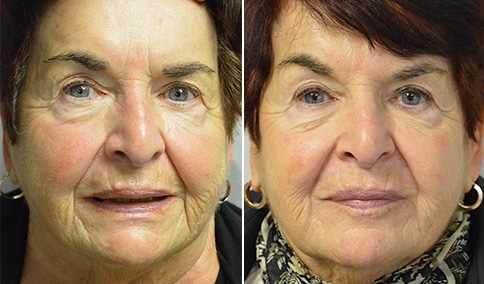
A delightful woman in her early 70’s who is bothered by the tired and aged appearance of her face. As we age, we lose volume in the face. She has had additional bony volume loss because of dentures. She is shown before and again, 5 weeks after initial correction with Botox to the corrugator muscles ( “ the 11’s”) and procerus muscles, as well as the placement of Resilient Hyaluronic acid ( RHA) to the corrugator lines and cheeks. The RHA is “resilient” and highly flexible, moving as she moves her face in animation so that she has a natural appearance at rest and with smiling and talking.
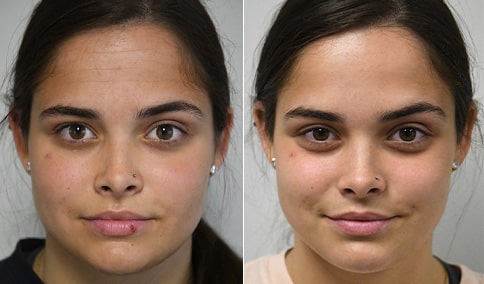
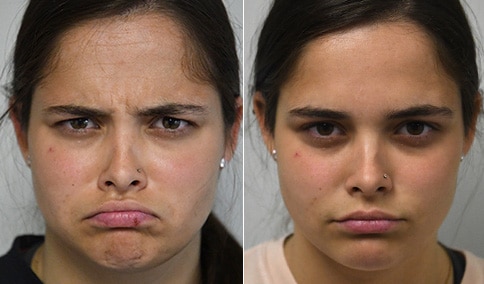
Botox – Patient 128
A Woman in her early 20’s who already has deepset forehead lines. She would also like a fuller lip. 25 units of botox were placed 2 weeks ago, she had a sunburn on her lip that needed to heal before the lips were done. ! syringe of restylane Kysse was placed to the lips
Botox & Fillers – Patient 127
A woman in her mid 50’s who had blepharoplasty elsewhere 18 months ago and was still bothered by the appearance around her eyes. On examination she has some brow ptosis from the normal deflation that occurs with aging, and the excess skin around her eyes corrects as the brow is elevated. She also has prominent crow’s feet lines with smiling. Although we could consider a brow lift I thought it would be prudent to try Botox first and see how much shaping of the brows and lateral brow elevation that we might obtain. She also has some deflation of the midface and Juvederm Voluma was placed. She had 45 units of Botox and 2 syringes of Juvederm volume. The effect on her brows was dramatic. Her cheeks appear more youthful as well. Additional Juvederm Voluma could be placed to the cheeks but we plan to wait until she returns to repeat her Botox, typically at 4 months.
Botox & Fillers – Patient 126
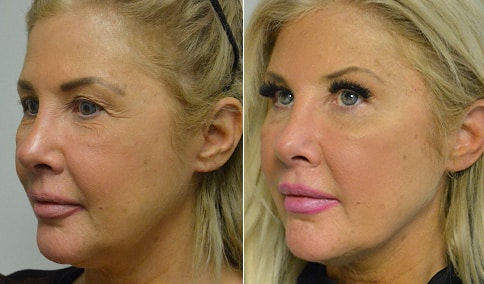
A woman in her mid 70’s who would like to look a little more rested in her appearance but without surgery. She has prominent “11’s” (corregator lines) of the forehead at rest. Because of age related volume loss the “marionette” lines ( chin-cheek creases) and nasolabial lines (lip cheek creases) are prominent. She is shown before and after Botox to the corrugator muscles and Restylane to the deep “11” lines. The Botox weakens the over active muscles here and the Restylane fills the “ditches” that have formed from this area being creased over and over . This gives her a less stressed look. 2 syringes of Restylane Lyft were placed to her “Marionette” lines and 2 syringes of Restylane Lyft to her nasolabial lines. This gives her a nice improvement that looks better in a natural way.
Botox & Fillers – Patient 125
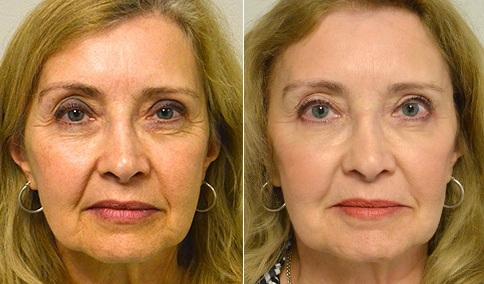
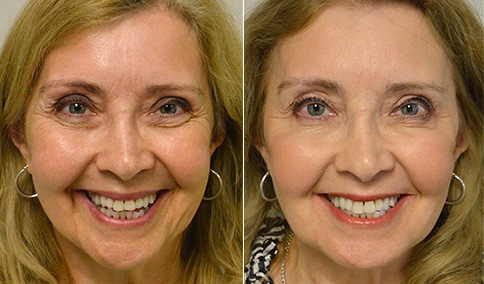
A woman in her early 60’s who is bothered by an aged appearance and wants to look better, but is not ready to consider surgery. She is bothered by brow asymmetry with her right eyebrow always being higher. Analysis of her face shows a strained appearance in the frown area ( sometimes called the “11’s”), age related volume loss of the midface and jowls, as well as prominent crow’s feet lines around the eyes at rest and with smiling. We decided on a plan of step wise correction. She first had Botox to balance the brows along with Restylane to the deep frown lines and Restylane lyft to the naso labial creases ( sometimes called “the parentheses” ) and chin –cheek lines ( sometimes called “marionette lines” after the lines around a puppets mouth). I then saw her 2 weeks later and placed some Juvederm Voluma to the cheeks. Finally, she returned for Restylane lyft to the “chin notch” and groove in front of the jowls.
She is pleased by her improvement which is natural in appearance. Friends ask her “if she has had her hair done”. This is one of my greatest compliments, because it means that others notice that she looks better but because it is natural, are not sure why, so they attribute the improvement to a new hair style.
How long do results last?
The effect of Botox® typically takes three to seven days to develop and lasts three to six months.
What can I do to prepare?
Avoiding Aspirin and NSAIDs, such as ibuprofen, for ten days prior to your treatment will decrease the risk of bruising. Topical vitamin K preparations may be helpful after treatment.
What are the risks?
In general the risks are few, and include:
- Ptosis: drooping of the eyelid is the most significant complication. It is usually seen within one to two days and lasts only one to two weeks. This has been rare in our practice but if this happens, you should contact our office for eye drops that may help minimize this condition.
- People that receive large doses (100 units or more) for neurological conditions may develop neutralizing antibodies that lead to a lack of response. Spacing injection sessions at least one month apart and keeping volumes low can avoid this. It is uncommon with cosmetic users, and we typically use 50 units or less given four months apart.
- Injection pain is usually mild. It can be decreased by using small needles, small syringes, and ice packs, as we do in our office.
- Some patients may develop localized reactions such as hives, redness, or minor swelling, which can easily be treated with icepacks, antihistamines, and hydrocortisone cream. There have been sporadic reports of temporary headaches. More commonly, chronic tension headaches are improved after the injection and some studies now suggest that Botox® is actually helpful in the treatment of certain types of migraines.
- Flu-like symptoms
What should I expect during recovery?
Dr. Hall has not found it necessary for patients to stay upright for several hours after the injections, and there has been no proven enhancement of effect when patients are instructed to use the (injected) muscles for one hour after the procedure. Most patients can resume their normal routine immediately after treatment.





Cosmetic & Plastic Surgery Specialist
"I treat my patients like I would treat
- Jonathan D. Hall, MD, FACSmembers of my own family."
Schedule Consultation